

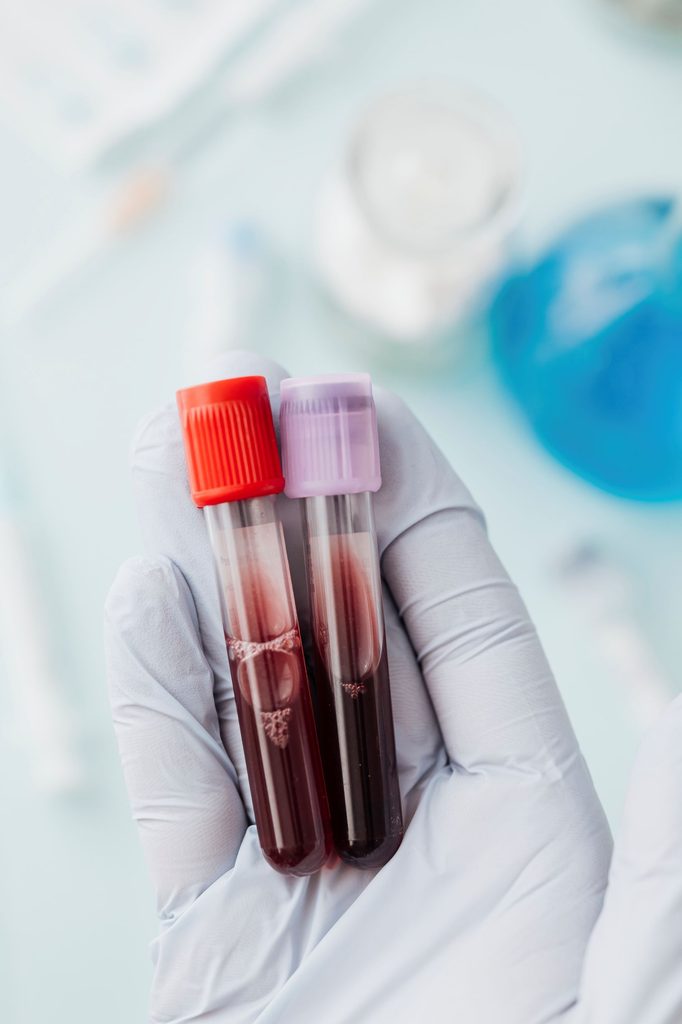
Sample haemolysis most often occurs with in-vitro damage. This can be minimised by:
– Using appropriately sized needles and avoiding excessive negative pressure during collection.
– Using gentle inversions when mixing blood tubes after collection (which includes red top CAT tubes and gold top SST tubes).
– Allow the serum sample to clot at room temperature (i.e. 30-60 minutes) in a stable environment – only refrigerate the serum tube after a strong clot has formed; production animals and horses need at least 60 minutes for the clot to form
– After the clot has formed, the sample can be centrifuged and serum removed from the clot – the separated serum can then be transported in a plain, labelled tube.
– Avoid prolonged storage, or exposure to excessive heat or cold.
– Fasting the patient prior to sampling helps avoid sample lipemia (this is a common cause of haemolysis in companion animals).
𝘕𝘰𝘵𝘦: O𝘤𝘤𝘢𝘴𝘪𝘰𝘯𝘢𝘭𝘭𝘺 𝘩𝘢𝘦𝘮𝘰𝘭𝘺𝘴𝘪𝘴 𝘤𝘢𝘯 𝘰𝘤𝘤𝘶𝘳 𝘪𝘯-𝘷𝘪𝘷𝘰, 𝘢𝘯𝘥
𝘤𝘩𝘦𝘤𝘬𝘪𝘯𝘨 𝘢 𝘊𝘉𝘊 𝘸𝘰𝘶𝘭𝘥 𝘩𝘦𝘭𝘱 𝘧𝘶𝘳𝘵𝘩𝘦𝘳 𝘦𝘷𝘢𝘭𝘶𝘢𝘵𝘦 𝘵𝘩𝘪𝘴 𝘥𝘪𝘧𝘧𝘦𝘳𝘦𝘯𝘵𝘪𝘢𝘭.