Our news

MPI update: HPAI

New Zealand has never had a detected case of Highly Pathogenic Avian Influenza (HPAI). The risk of a HPAI virus such as H5N1 arriving here is low as New Zealand is isolated from other landmasses, is not on the flyways for any migratory waterfowl and we have strong border biosecurity.  Biosecurity New Zealand has monitoring […]

We haven’t forgotten the cows!

RACHEL WHITEHEAD We are seeing a continual emergence of drench resistance in cattle. The importance of monitoring the efficiency of drenches in cattle, particularly dairy, is key to halt the production limiting effect of resistant parasite burden. Faecal egg counting (FEC) alone does have its limits when used for cattle. The host immune response can […]

Heavy rain and leptospirosis

ALICE FRASER A warm, wet summer certainly brings an abundance of feed for livestock grazing or to harvest, but it also brings more disease issues to consider. For sheep farmers, such conditions can cause increased cases of fly strike, early bouts of Haemonchus and the threat of an upcoming high sporidesmin challenge, to name a […]

Hypoadrenocorticism – a diagnostic challenge

REBECCA ALLAN A recent case through the laboratory highlighted the challenges when diagnosing hypoadrenocorticism and in differentiating the typical from atypical form of the disease. Hypoadrenocorticism or Addison’s disease is an uncommon endocrinopathy that occurs when there is destruction or atrophy of layers of the adrenal cortex. The most common form is when both the […]

Diarrhoea and gut histo

ROB FAIRLEY We have received several lamb and calf cases recently with post mortem samples from animals with diarrhoea. Here are some recommendations to ensure you get the most out of your cases, especially when sacrificing an animal for histological sampling of the gut. 1. Immerse your samples of gut into formalin as soon as possible […]

I see red, I see red, I see red!

We just love getting customer feedback, especially suggestions for improvement that will benefit many of our clients. The most recent  improvement is to molecular test reporting. You will now find positive, pool positive, detected, weak detect, high positive etc. results for molecular and BVD milk tests are highlighted in red font on reports.  This will […]

Newsletters

Our client newsletter includes information about emerging animal health issues, new tests and services, continuing professional development opportunities and tips for getting the most out of your local laboratory. To view and download back issues of our newsletter select from the volumes below: Subscribe to our mailing list here.

A collaborative case

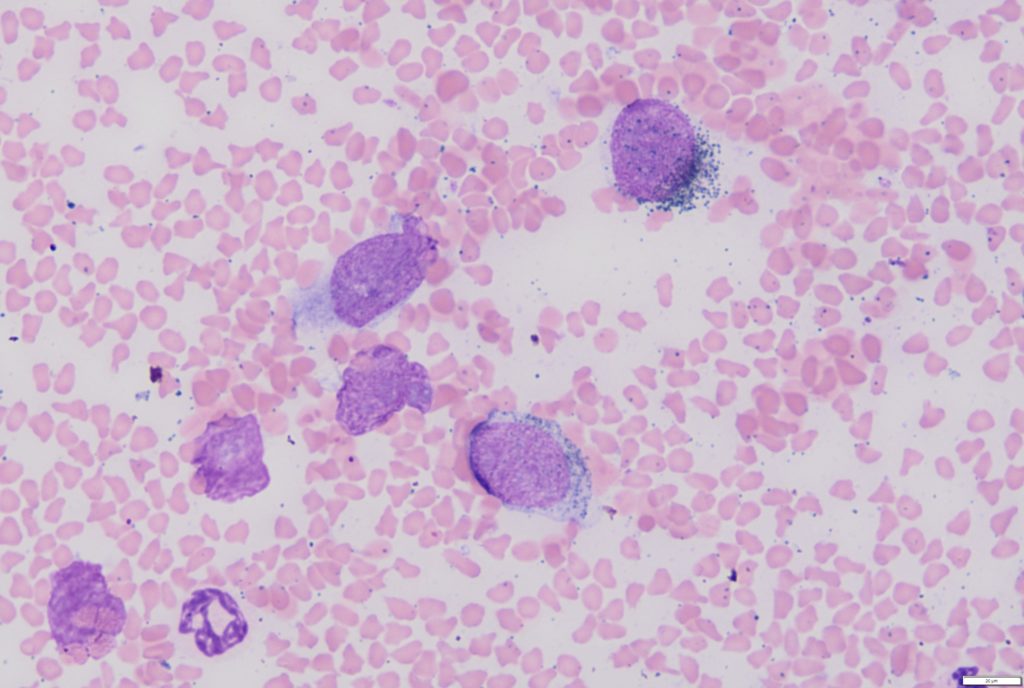
CATHY HARVEY & REBECCA ALLAN Clinical history: Buddy, a 4-year-old neutered male Border Collie presented with lethargy and an in-house PCV of 12%. There was no free blood in the abdomen and the spleen was normal. He had progressive pancytopenia without regeneration, a single dose of dexamethasone and two blood transfusions, before bone marrow samples […]

Hidden in fat

KATHRYN JENKINS A recent interesting case highlighted the issue of a lesion which can mimic the clinical appearance of a benign lipoma. Clinical history: A 10-year-old dog presented with a 7 cm diameter mass located on the upper forelimb, which had been slowly growing over the last 4-6 months. The mass palpated like a lipoma, […]

Update on the prevalence of anthelmintic resistance 2021–2022

Sarah Riddy, Gribbles Veterinary Pathology With the routine use of Gribbles Veterinary’s automated faecal egg count reduction test (FECRT) report system, we are pleased to announce the resumption of our annual update on anthelmintic resistance. This report details the analysis of data from fully differentiated FECRTs submitted to the Gribbles network for the season November […]